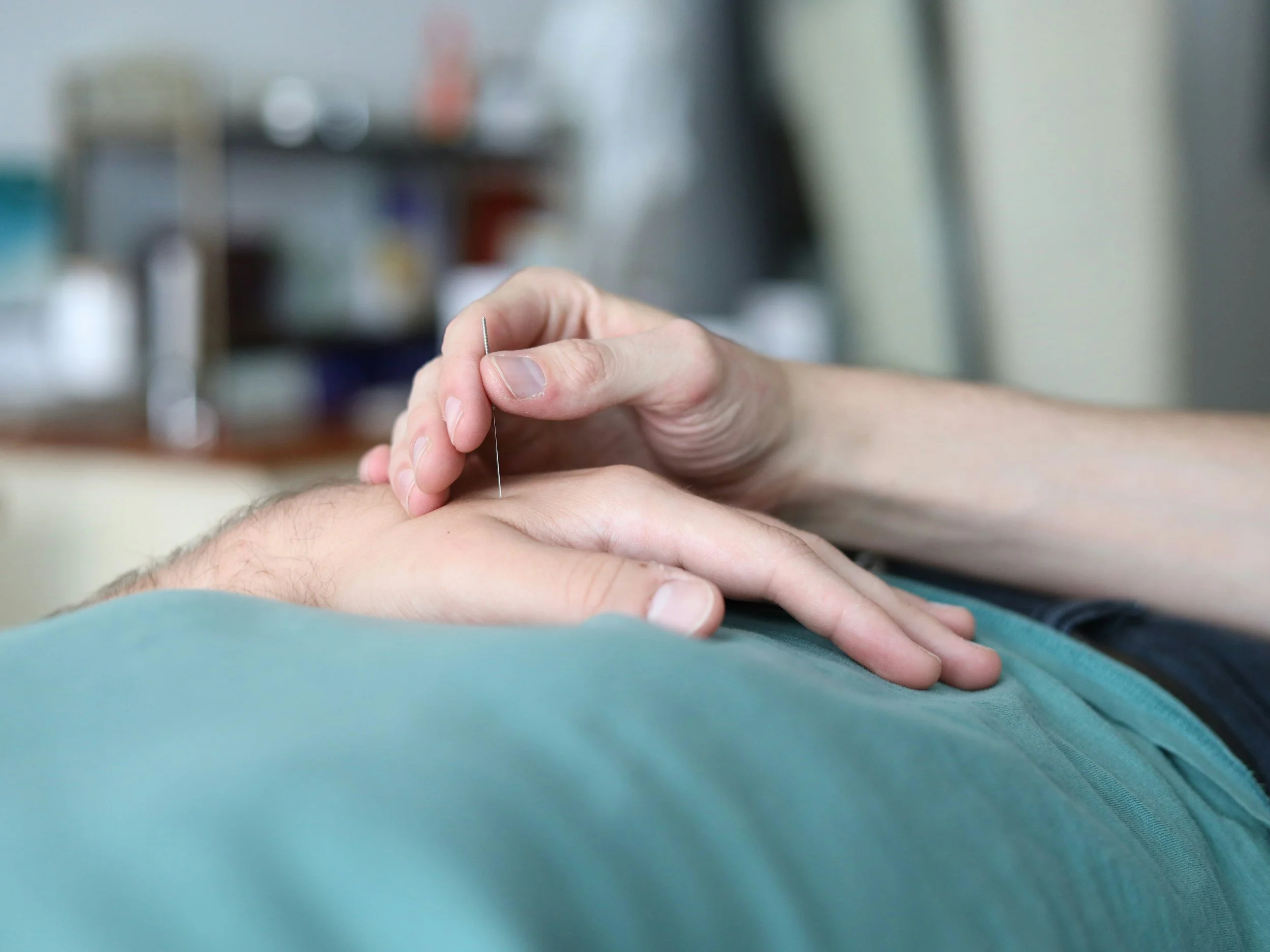
If you’re dealing with a stubborn knot in your shoulder, a nagging low back, or tension headaches that keep coming back, you’ve probably heard that dry needling can help. It certainly can, but not all dry needling is the same, and who is holding the needle matters a great deal.
At the Healing Arts Center, we’ve been bringing evidence-based needle therapy to the Philadelphia region for over 25 years. Here’s what we’d want you to look for before you book.
1. Real, Extensive Training with a Needle
Licensed acupuncturists complete years of graduate-level training, including over a thousand hours of supervised clinical practice where needling is the core skill. Every point, angle, and depth is learned with an experienced instructor supervising.
Many other providers who offer dry needling learn it in short, continuing education courses, often over a weekend or two. That’s less than 50 hours of training! Neither personal trainers nor physical therapists are licensed to use needles and have no training piercing the skin in school. The teenager at Claire’s has more experience with a needle than your average PT or trainer. If you’re going to try dry needling, ask any provider: How many hours of needle training have you had?
2. A Long History with the Technique
Dry needling didn’t appear out of nowhere. Needling tight muscles and trigger points is something acupuncturists have done for centuries. Many of the “new” dry needling techniques are built on that foundation with a little help from Dr. Janet Travell. When you see an acupuncturist, you’re going to the people who developed and refined this skill, not someone who picked it up recently as an add-on.
Our team, for example, has decades of combined experience treating pain, sports injuries, headaches and migraines, and chronic conditions.
3. A Strong Safety Record and Clean Needle Technique
Needles are safe when they’re in skilled hands. The safety record of modern acupuncture is one of the best in medicine, and serious complications are near zero when treatment is done by a well-trained, licensed practitioner. Areas like the chest, upper back, and neck call for precise anatomical knowledge and respect for depth.
Recent news articles showing injuries to the lungs and other areas of the body are all examples of dry needling done by those with minimal training.
Look for a provider who uses sterile, single-use needles, follows Clean Needle Technique, and can calmly explain what they’re doing and why. A shorter training path means a shorter track record, and you shouldn’t have to be their guinea pig.

We can get you running the steps again!
4. Care for You, Not Just the Muscle
A tight muscle is often a symptom, not the whole story. Stress, sleep, hormones, posture, and old injuries can all keep pain going. At the Healing Arts Center, we pair dry needling with whole body acupuncture to address more than just a single failing muscle. Ample studies have shown this to be the more effective approach.
We also provide guidance on herbal medicine, exercise, nutrition, supplements, and lifestyle changes so the relief lasts.
5. Proper Licensure
Make sure your provider is licensed in Pennsylvania. Practitioners like personal trainers and physical therapists aren’t allowed to be licensed to needle in the state, and are practicing illegally if they are. Hard to trust someone that is already not following the law.
Ready to Feel Better in a safe, effective way?
Our licensed acupuncturists are here to help you move, sleep, and live with less pain with the addition of dry needling.
Have more questions, we respond to calls, texts and emails. Just use the contact form or text me button.